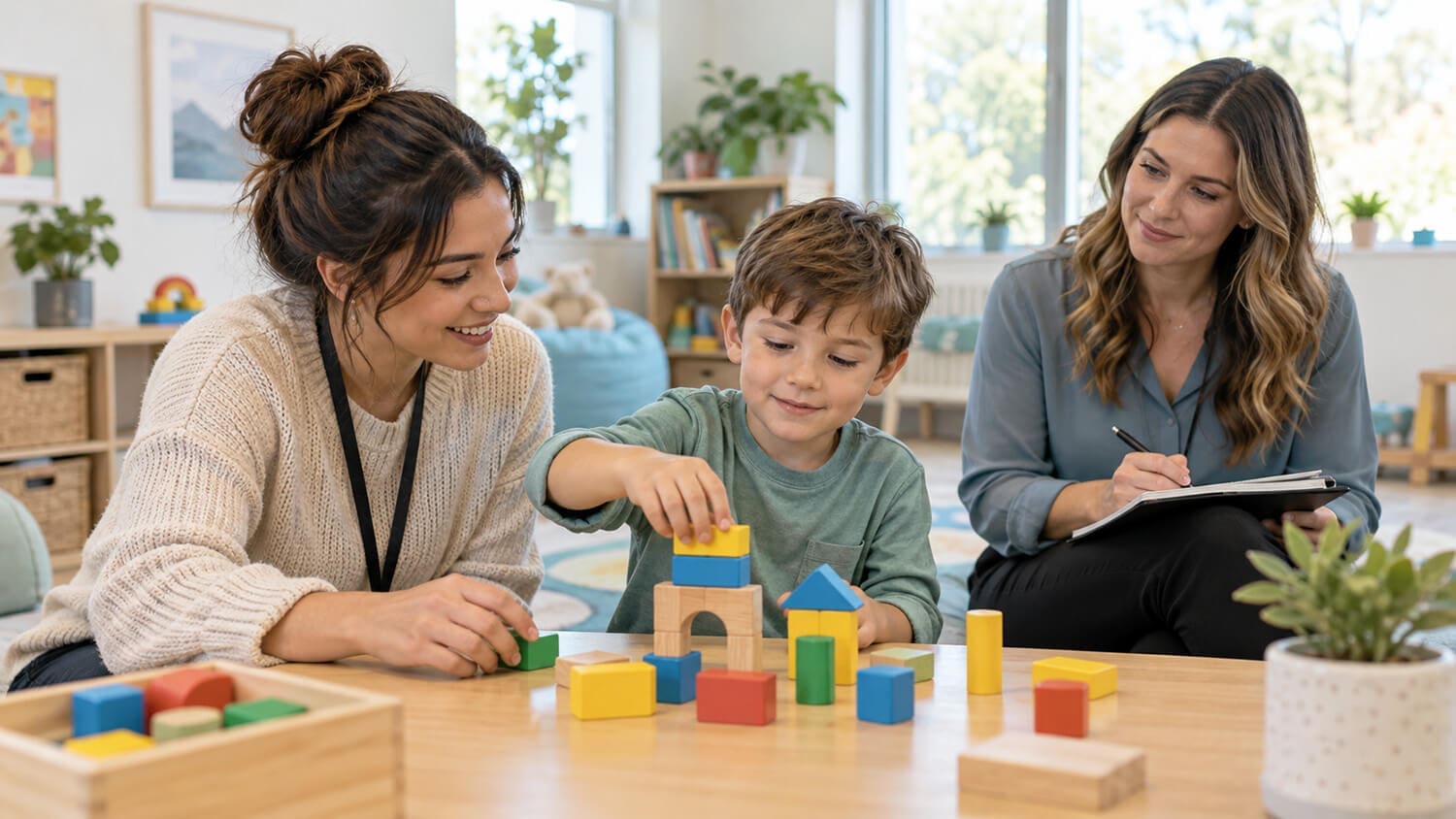
WH questions help children request information, understand conversations and talk about people, places, actions, events and reasons. This practical collection includes 60 WH questions for kids, with ten examples each for what, who, where, when, why and how. Use them during play, shared reading, everyday routines or structured speech-language practice.
The questions are organized by question word, relative difficulty and the type of information needed to respond. The three levels describe the demands of each question, not the age of the child:
- Level 1: See it — The answer is visible or immediately available.
- Level 2: Know it — The child uses familiar knowledge, personal experience or an established routine.
- Level 3: Think about it — The child recalls an event, predicts what may happen, puts information in order or makes an inference.
These levels are not rigid age bands. Begin with questions your child can answer successfully, then increase the challenge gradually. For example, you might remove a visual support, ask about something that happened earlier or move from identifying an answer to explaining it.
Children can answer by speaking, pointing, signing, gesturing, selecting a picture or using augmentative and alternative communication (AAC). Some questions may have several appropriate answers. The goal is to help your child understand what information is being requested and communicate a meaningful responsenot produce one exact sentence.
How to use this list: Choose a few questions that fit naturally into an enjoyable activity. Allow time for your child to process and respond, offer support when needed and stop before the activity begins to feel like a test.
What Questions
“What” questions can ask about objects, actions, functions, categories, preferences and events. Questions about something the child can see are generally easier than questions requiring recall, prediction or explanation.
| Level | Question | Expected answer type | Optional support |
|---|---|---|---|
| See it | What is inside the open box? | Visible object | Look inside together or point toward the box |
| See it | What is the child doing in this picture? | Visible action | Point to the child’s hands or movement |
| See it | What color is the largest block? | Visible attribute | Place two differently colored blocks together |
| See it | What is the person carrying? | Visible object | Point toward the object |
| Know it | What do you use when your hands are wet? | Object and function | Show a towel and an unrelated familiar object |
| Know it | What foods do you like to eat for a snack? | Personal preference | Show pictures of familiar foods |
| Know it | What belongs with a toothbrush? | Related object or category | Offer toothpaste and two other choices |
| Think about it | What happened after you arrived at school today? | Event recall | Use a visual schedule or ask what happened first |
| Think about it | What could you do if your toy stopped working? | Possible solution | Show the toy and model one possible response |
| Think about it | What might happen next in this story? | Prediction | Review the picture and previous event for clues |
An answer does not need to match an adult’s wording exactly. For example, suitable answers to “What could you do if your toy stopped working?” might include asking for help, checking the batteries, trying again or choosing another toy.
Who Questions
“Who” questions request information about a person or group of people. Children may first identify familiar or visible people before answering questions about roles, remembered events or who could help in a particular situation.
| Level | Question | Expected answer type | Optional support |
|---|---|---|---|
| See it | Who is wearing the striped shirt? | Visible person | Point to each person while repeating the question |
| See it | Who is building the tower? | Person performing an action | Draw attention to the blocks and hands |
| See it | Who is sitting beside the teacher? | Person and position | Emphasize the word “beside” and gesture |
| See it | Who has the red backpack? | Person associated with an object | Point toward the backpacks |
| Know it | Who helps you get ready in the morning? | Familiar person or people | Use family photographs if helpful |
| Know it | Who can help someone whose tooth hurts? | Community role | Show pictures of several community helpers |
| Know it | Who do you like to play or spend time with? | Personal response | Accept family members, friends or other familiar people |
| Think about it | Who helped clean up after the activity? | Event recall | Review the people who participated |
| Think about it | Who might know how to repair a broken sink? | Appropriate helper | Discuss what kind of help is needed |
| Think about it | Who do you think left the muddy footprints in the story? | Story inference | Look for clues involving shoes, weather or characters |
Use inclusive language around families and caregivers. Do not assume every child lives with, visits or receives help from the same combination of family members.
Where Questions
“Where” questions request a place, position or destination. Visible locations may be answered through looking or pointing, while questions about previous events require memory and language organization.
| Level | Question | Expected answer type | Optional support |
|---|---|---|---|
| See it | Where is the ball? | Visible location | Place it somewhere clear, such as under a chair |
| See it | Where is the child standing? | Visible place or position | Point to the child and surrounding scene |
| See it | Where did the toy animal hide? | Visible position | Use simple positions such as in, on or behind |
| See it | Where is the book compared with the cup? | Positional relationship | Place the objects beside or behind one another |
| Know it | Where do you keep your shoes at home? | Familiar location | Walk toward the usual location if needed |
| Know it | Where would you go to borrow a book? | Familiar community place | Offer two place pictures |
| Know it | Where should dirty clothes go? | Location connected to a routine | Use the actual laundry basket |
| Think about it | Where did you last use your crayons? | Remembered location | Think through the previous activity together |
| Think about it | Where could the character go to stay dry from the rain? | Possible location | Review available places in the picture |
| Think about it | Where did the story begin, and where did it end? | Story setting and sequence | Revisit the first and final pages |
If a child answers “the ball” when asked “Where is the ball?”, acknowledge that they identified the correct object, then model the requested location: “Yes, the ball is under the chair.”
When Questions
“When” questions ask about time, routines, occasions or the order of events. Because time is less visible than an object or place, visual schedules, sequence cards and familiar routines can be particularly helpful.
| Level | Question | Expected answer type | Optional support |
|---|---|---|---|
| See it | When do we use this umbrella—when it is raining or when it is sunny? | Condition or occasion | Show weather pictures |
| See it | When will the timer ring—before or after the sand reaches the bottom? | Immediate sequence | Watch the timer together |
| See it | When did the child put on the boots—before or after going outside? | Visible sequence | Use two ordered pictures |
| Know it | When do you usually brush your teeth? | Familiar routine or time | Refer to a morning or bedtime schedule |
| Know it | When might you wear a sweater? | Condition or occasion | Show warm- and cold-weather pictures |
| Know it | When do you normally eat your first meal of the day? | Routine or part of day | Offer morning, afternoon and night visuals |
| Know it | When is your next school or therapy day? | Day or scheduled event | Check a calendar together |
| Think about it | When did you realize that you needed help? | Recalled moment or event | Discuss what happened immediately beforehand |
| Think about it | When should the character ask an adult for help? | Judgment based on a situation | Review the problem in the story |
| Think about it | When did the problem in the story begin? | Story timeline | Revisit the events in order |
Children may answer “when” questions with a clock time, part of the day, day of the week, event or condition. “At seven,” “in the morning,” “after breakfast” and “when the alarm rings” can all be valid responses depending on the question and context.
Why Questions
“Why” questions request a cause, purpose, motivation or reason. Some answers are directly visible, while others require the child to connect events, interpret feelings or infer information that has not been stated.
| Level | Question | Expected answer type | Optional support |
|---|---|---|---|
| See it | Why is the child using a towel? | Visible cause or purpose | Show the child standing beside spilled water |
| See it | Why did the block tower fall? | Visible cause | Recreate the tower with an unstable base |
| See it | Why is the person covering their ears? | Visible or contextual reason | Include a noisy object in the picture |
| Know it | Why do we put food in a refrigerator? | Familiar purpose | Compare food stored inside and outside |
| Know it | Why do people wear seat belts? | Everyday reason or safety function | Use a picture of someone riding in a car |
| Know it | Why might someone ask for a break? | Personal need or reason | Discuss being tired, overwhelmed or needing rest |
| Know it | Why do you enjoy one of your favorite activities? | Personal explanation | Accept sensory, social, emotional or interest-based reasons |
| Think about it | Why might the character be looking under the bed? | Inferred motivation | Review what the character was doing beforehand |
| Think about it | Why did the friend change their mind? | Story inference | Identify dialogue, feelings or new information |
| Think about it | Why might this plan work better than the first one? | Comparison and reasoning | Place both plans side by side |
Avoid insisting on one “correct” emotional interpretation when the evidence allows several possibilities. If a character is looking down, for example, they could be sad, tired, thinking, watching something or avoiding bright light. Ask the child what clues support their answer.
How Questions
“How” questions can ask about a method, sequence, quantity, condition, experience or explanation. The expected response may range from demonstrating a simple action to describing a multi-step solution.
| Level | Question | Expected answer type | Optional support |
|---|---|---|---|
| See it | How is the child moving across the room? | Visible manner or action | Contrast walking, running and crawling |
| See it | How many cups are on the table? | Visible quantity | Touch or move each cup while counting |
| See it | How does the toy open? | Visible method | Let the child manipulate or demonstrate with it |
| See it | How does the fabric feel? | Sensory description | Offer contrasting textures |
| Know it | How do you wash your hands? | Familiar procedure | Use a visual sequence or demonstrate together |
| Know it | How can you let someone know that you need help? | Communication method | Include speech, gesture, sign and AAC options |
| Know it | How do you feel when a favorite activity is about to begin? | Personal condition or feeling | Offer emotion words or symbols without requiring one answer |
| Think about it | How could you carry several toys without dropping them? | Problem-solving strategy | Provide a basket, bag and open hands |
| Think about it | How did the character solve the problem? | Story recall and explanation | Review the relevant pages or sequence |
| Think about it | How would the story change if the door had been locked? | Prediction and explanation | Discuss possible alternatives without requiring one answer |
Some “how” questions can be answered by demonstrating rather than explaining. If asked “How does the toy open?”, successfully opening it may show understanding even if the child does not describe the action verbally.
How to Use These WH Questions
Choose a small number of questions that fit naturally into an activity. Begin with a level where the child can participate successfully, and provide support before frustration builds.
To make a question easier, you can:
- Make the answer visible.
- Shorten the sentence.
- Use familiar vocabulary.
- Add a photograph, object, gesture or symbol.
- Provide two meaningful choices from the correct answer category.
- Model the answer and invite the child to respond in their preferred way.
To increase the challenge gradually, you can:
- Remove one visual support.
- Ask about a recent event rather than something currently visible.
- Change the person, object or setting.
- Ask the child to explain how they know.
- Practise the same question type during a different routine.
- Move from identifying an answer to recalling, predicting or inferring.
Avoid presenting all 60 questions as a test. A few relevant questions during an enjoyable activity are usually more meaningful than a long drill once the child has disengaged. Mix questions with comments, models and opportunities for the child to initiate communication too.